
Clay County Release Meaning
A person is released from Clay County Jail when local custody ends. That fact does not always mean the person went home. Release can mean bond, a court order, credit for time served, sentence expiration, a move to another county, commitment to the Georgia Department of Corrections, or transfer on another agency's hold. The record must identify both the reason and the destination. Clay County released inmates normally stop appearing as current inmates once the jail closes their local custody event. Since Clay County does not publish a public current roster or recent-release dashboard, a missing online name is not proof of release.
The source depends on the custody path. The Clay County Sheriff's Office, whose official county page identifies Sheriff Shivers, creates local booking and bonding reports and furnishes inmate information on request. A court clerk holds the orders and case entries that explain why custody changed. GDC, the State Board of Pardons and Paroles, and the Department of Community Supervision hold state custody, parole, and felony probation information. VINE may add a status alert. Each record answers a different part of the same question.
Clay County Release Types
Clay County release records make more sense when the release code is tied to its legal effect. A bond-out ends the current jail stay while the charge continues. Time served or sentence expiration ends a term of confinement, subject to any other hold. A dismissal may support release only if no other case or detainer keeps the person in custody. Probation can be the sentence itself. Parole applies to a state prisoner released under Board authority. A transfer ends custody at one facility but starts or continues it elsewhere.
| Release type | What it means | Next record to check |
|---|---|---|
| Bond | The person posts bond and leaves jail while the case remains open. | Sheriff bonding report and the court docket |
| Time served | The court credits custody toward the sentence. | Sentencing order and jail release entry |
| Sentence expiration | The local term ends after applicable credit and earned time. | Jail calculation and court sentence |
| Probation | The person serves a community sentence under court terms. | Court order and DCS when felony supervision applies |
| Parole | A state prisoner leaves prison under Board conditions. | Board parolee search and DCS |
| Transfer or hold | Local custody ends because another agency takes custody. | The named receiving agency's locator or records office |
“Discharge” usually means an agency's custody or supervision term has ended. “Time served” means the sentence is satisfied by time already spent in custody. A “detainer” is a request or hold from another authority. Those terms should not be treated as synonyms. The actual Clay County release entry and the legal order behind it control the meaning.
Clay County Release Record Fields
Clay County's official sources do not identify one standard public release form. The record is more likely to be a set of fields drawn from the booking, bonding, jail-management, and court systems. The sheriff confirms that the office completes booking and bonding reports, provides inmate information when asked, and maintains bookings, fingerprints, photographs, and criminal histories. A focused request should seek the fields needed to distinguish a community release from a transfer.
| Field | What it shows |
|---|---|
| Name and identifiers | The identity used for the Clay County booking |
| Booking number and date | The local custody event tied to the release |
| Charges or warrant basis | Why the person entered custody, subject to record limits |
| Release date and time | When Clay County custody ended, if maintained and released |
| Release reason or code | Bond, court order, time served, transfer, hold release, or another basis |
| Bonding report | Bond activity for a person released to return to court |
| Hold or destination | Whether another county, GDC, federal, or immigration authority took custody |
| Booking photograph | The intake image, if retained and lawfully releasable |
The release record does not replace the court case. A jail entry can show the moment local custody ended, while a bond order, sentence, dismissal, probation order, or commitment order explains the legal cause. If exact proof is needed, request both layers. Juvenile, sealed, restricted, investigative, medical, security-related, and other exempt material may be withheld or redacted.
Note: A Clay County release entry can exist even when no public online roster or release list displays the person.
Clay County Bond Releases
Clay County's sheriff page makes a useful local distinction. It names booking reports and bonding reports as separate duties. A booking report documents entry into custody. A bonding report concerns a person who posts bond to return to court. A bond release therefore proves a custody change, not the end of the charge. The person can be out of jail while the case is still pending, and later court events can change the bond or custody status.
Start with the sheriff to confirm the bonding event and release from Clay County Jail. Then use the relevant clerk to check the case. Clay County Superior Court handles felony and other Superior Court matters, but a lower court may hold some early or lower-level records. The docket may show that bond was set, changed, revoked, forfeited, or discharged. It may also show a plea, dismissal, sentence, or later warrant. The sheriff supplies the custody fact. The court supplies the case posture.
Does release on bond mean the case was dismissed? No. It means the person left jail under bond terms and must keep meeting the court's requirements while the case proceeds.
Note: Ask for the bond report and release entry together when the reason for a recent Clay County release is unclear.
Request Clay County Release Records
A narrow request is the best route because Georgia law does not require an agency to create a new report that does not already exist. Clay County may hold a booking sheet, release entry, bond sheet, transfer notation, or other jail record without maintaining a ready-made “released inmates” list. Give enough detail to locate the right booking and name the existing records sought. The sheriff's official page supports direct requests for inmate information and booking-related material.
- Identify the person by full name, date of birth if known, and any prior or alternate name.
- Add the arrest or booking date, booking number, charge, or case number when available.
- Ask for the booking sheet, release sheet or release entry, date and time, reason or code, and any hold or transfer destination.
- Request the bonding report if bond may have caused release. Ask for the booking photo only if it is needed and legally releasable.
- If the answer shows a GDC commitment or transfer, ask for that local notation, then send the state-record request to GDC.
- For the legal order, request the docket, bond order, disposition, sentence, probation order, or release order from the proper court clerk.
Clay County Jail
PO Box 22
Fort Gaines, GA 39851
(229) 768-2505
For state offender material, the GDC Open Records Request portal states that non-medical copies cost $0.10 each. Search and redaction time may be billed at the rate of the lowest-paid qualified employee. GDC gives an initial response within three business days. Local costs were not stated in the Clay County sources reviewed, so ask for an estimate before authorizing work.
Clay County Release Record Law
The Georgia Open Records Act overview cites O.C.G.A. § 50-18-70 et seq. It covers records such as documents, photographs, computer-generated information, data, and data fields prepared, kept, or received by a public agency. This broad definition supports requests for existing Clay County booking and release material. It does not make every field public, and it does not require the sheriff to build a special 24-hour or 72-hour release list when no such report exists.
Georgia agencies generally must produce available records within three business days or describe the records and give a timetable when production will take longer. The Georgia First Amendment Foundation's summary also notes notice when estimated costs exceed $25 and possible prepayment when costs exceed $500. Those are statewide rules, not a claim that a Clay County request will cost those amounts. A request can be narrowed after a cost estimate.
Public access can change when a record is restricted, sealed, juvenile, first-offender-disposed, or otherwise confidential. Georgia often uses “record restriction” rather than treating every limit as expungement. An absent public result may also reflect a name variation, a non-digitized file, a different court, or a record outside the public index. Ask the office that holds the record before drawing a conclusion.
The source image below comes from the Governor's Office explanation of Georgia open-records requests.
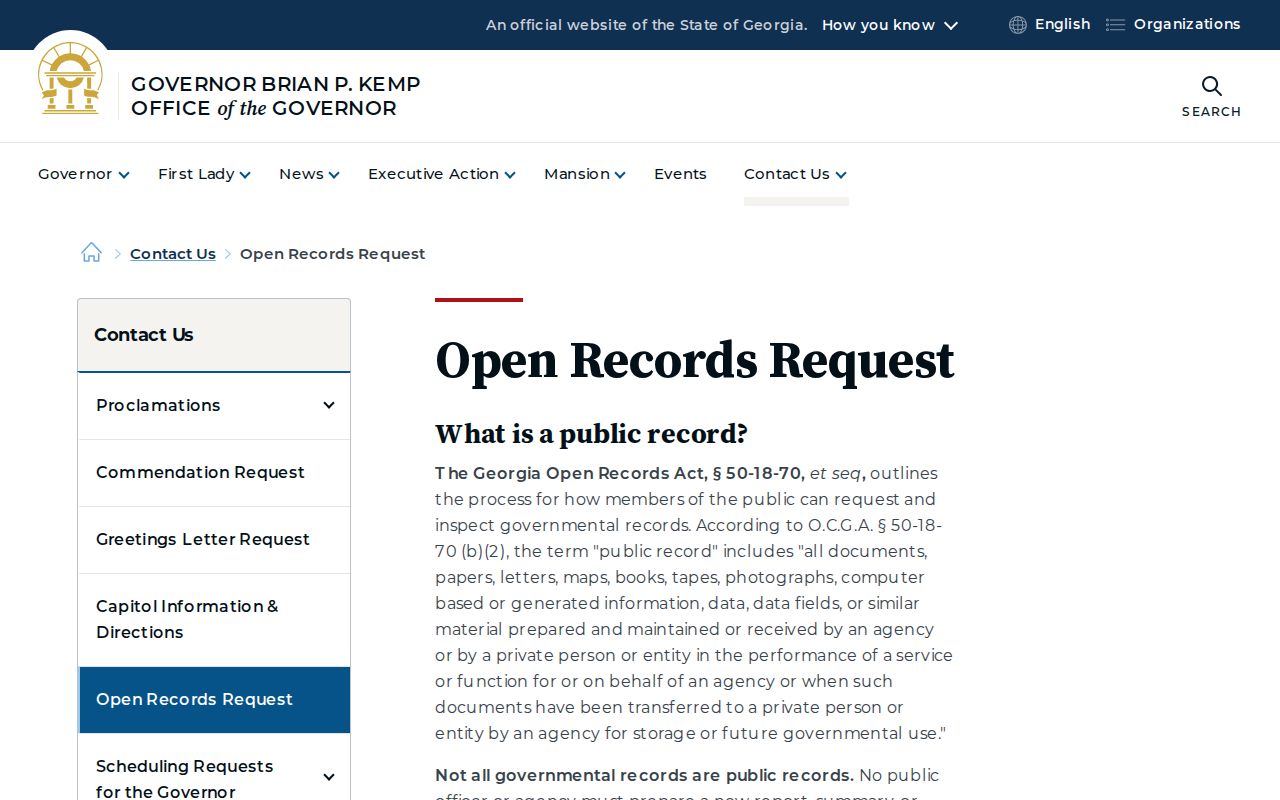
It reinforces why an existing release entry should be requested by name instead of demanding a new public release dashboard.
Note: Georgia's response deadline governs agency action, but it does not guarantee that every requested release field is public.
Correct Clay County Release Errors
A release-record correction should start with the office that created the disputed entry. Send a Clay County booking date, release time, bond entry, local custody code, fingerprint, or photograph issue to the sheriff. Send a sentence, disposition, dismissal, probation order, or docket issue to the court clerk. GDC should address a state offender record. The State Board should address a parole decision or parole database issue. This source-based route keeps a local bond-out dispute from being sent to a state prison office that did not create it.
State the exact field believed to be wrong, attach the record or citation that supports the change, and ask what correction process applies. Do not ask one agency to rewrite another agency's record. Separate but related records can differ because they describe different events. The jail may show when the door-out event occurred, while the court shows when the judge signed the order. A transfer time may also differ from the receiving agency's admission time.
- Discharge
- The end of an agency's custody or supervision term.
- Detainer
- A hold or request from another authority that may prevent community release.
- Record restriction
- A Georgia process that can limit public access to qualifying record information.
- Nolle prosequi
- A prosecutor's formal choice not to pursue a charge at that time.
Find Clay County Released Inmates
Clay County released inmate searches begin with a named person, not a public feed. The official county sources reviewed do not offer a recent-release page, current public jail roster, or sheriff app. That makes custody classification the first task. Was this a short local booking, a felony case that led to GDC custody, a release under supervision, or a handoff to another government authority? Use the answer to choose the record system.
- Contact the Clay County Sheriff's Office or jail. Ask whether the person is in custody, was released to the community, or was transferred.
- Check the court record for bond, dismissal, sentence, probation, time served, revocation, or commitment to GDC.
- Use GDC only if the person entered Georgia state custody. Search by name, GDC ID, case number, and available description fields.
- Check the Board's parolee tools and DCS when a state release may include parole or felony probation supervision.
- Use Georgia VINE for a covered custody-status check or notification, then confirm the event with the source agency.
- Use BOP or ICE tools only when the known record points to federal or immigration custody.
- Request the release, bond, transfer, or court record when online systems do not settle the question.
For people checking who left the jail today, the Clay County 24-Hour Release List explains the specific-person fallback in more detail. It does not claim that Clay County publishes a feed.
Clay County Direct-Records Model
Clay County's strongest local release pattern is direct records. The sheriff's public page confirms that booking reports, bonding reports, inmate information, fingerprints, photographs, and criminal-history material are maintained as agency functions. Yet it does not expose those records through a public dashboard. This is not the same as having no records. It means the public access route is a focused question or request.
The most efficient chain has four proof points:
- Sheriff status establishes the local booking, release, bond, or transfer event.
- The court record explains the order, case result, sentence, or next hearing.
- VINE can add a custody-change alert when a participating feed covers the person.
- GDC, the Parole Board, or DCS takes over when state custody or supervision applies.
The official sheriff source can be seen in the Clay County booking and bonding duties page.
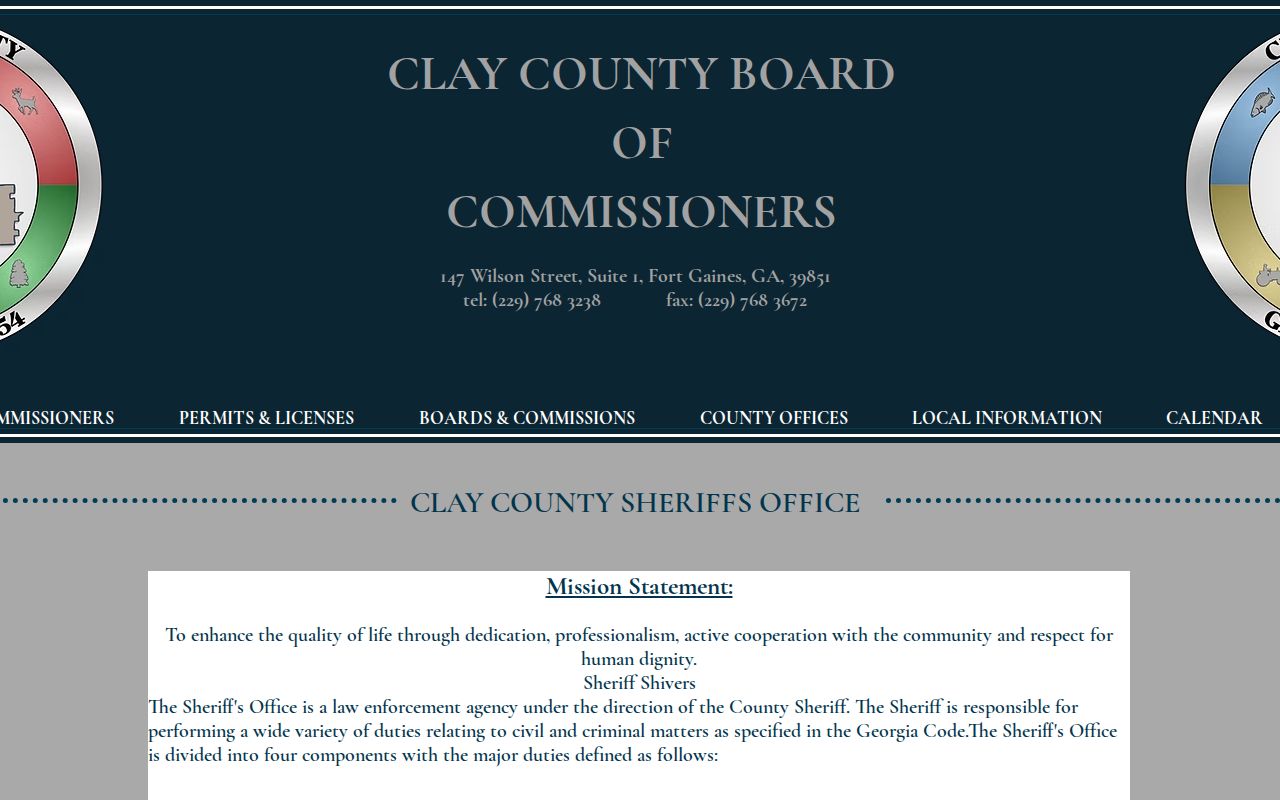
The page supports the direct-contact model by listing inmate information and booking-related records among the sheriff's local duties.
Note: Search results for Clayton County or another state's Clay County do not verify a Fort Gaines jail release.
Clay County GDC Release Lookup
The Georgia Department of Corrections offender search covers the state system. It is not a Clay County Jail roster. Use it when a Clay County court case led to a state sentence, when the sheriff confirms a transfer or commitment to GDC, or when the person is known to have served time in a Georgia state facility. A current GDC facility points to state custody even though local jail custody has ended. A past release date may support state release, but GDC's own disclaimer calls for verification.
| Source or field | Use | Limit |
|---|---|---|
| Name and description | Find possible state offender matches | Compare identifiers and aliases carefully |
| GDC ID or case number | Narrow the state search | A Clay County booking number may not be a GDC ID |
| Facility location | Shows current state placement when displayed | Not proof of a local bond release |
| Offense or charge | Helps match the state record | The court file remains the legal case source |
| Release date | May show a state release or discharge date | Verify if formal proof is needed |
| TPM lookup | Shows a Tentative Parole Month | A TPM is not a final release date |
| County jail or sheriff | Checks local custody and local release | No official online Clay County feed was found |
| BOP or ICE | Checks indicated federal or immigration custody | Use only when facts point to that system |
The GDC Offender Query warns that photographs may display automatically. Its public result is a locator and status lead, not a certified discharge sheet. Written verification goes to Inmate Records and Information, PO Box 1529, Forsyth, GA 31029. The GDC Find an Offender explanation is shown below.
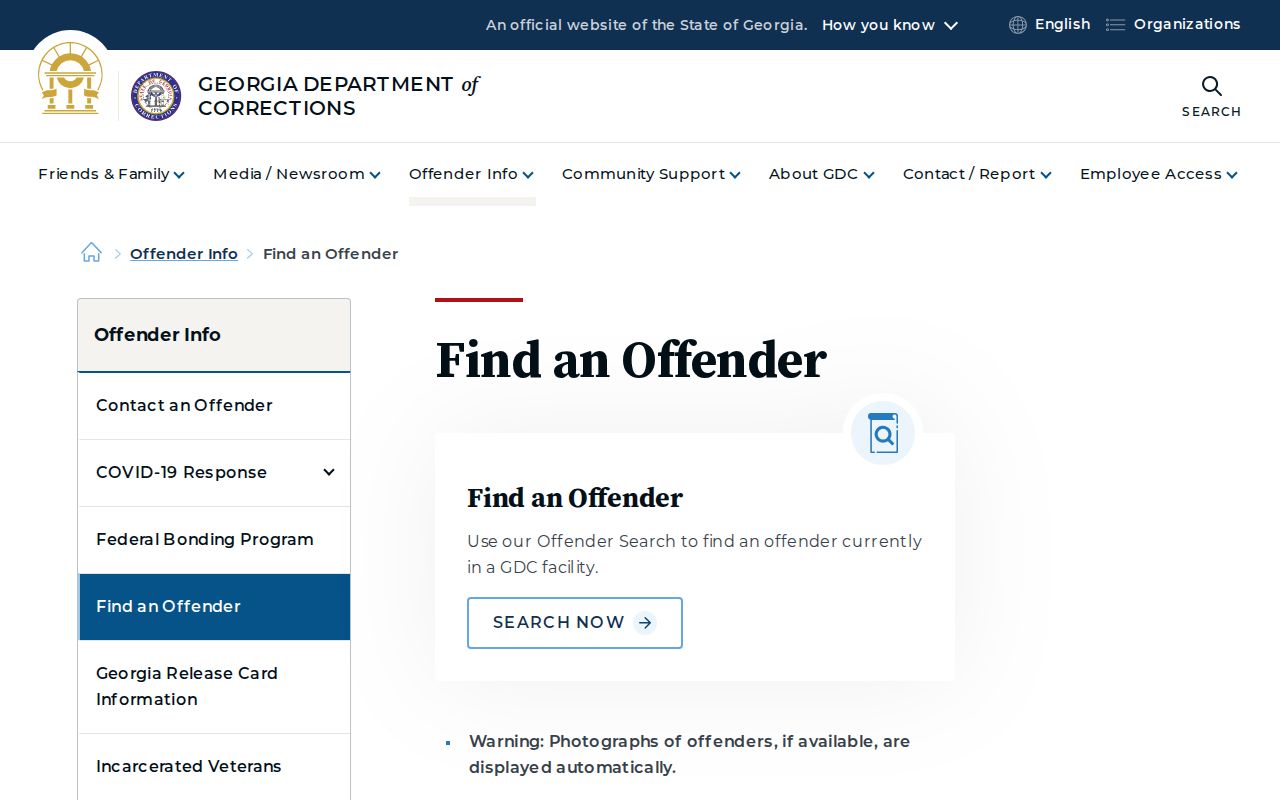
The state page's verification warning is why an exact Clay County release claim should be checked with the agency that owns the record.
Clay County Court Release Proof
Clay County is part of the Pataula Judicial Circuit. That court layer matters more here because the jail has no public release feed. A court docket can show the legal act behind a release, including a bond order, sentence to probation, credit for time served, dismissal, nolle prosequi, DOC commitment, or later revocation. It may not show the exact time the jail opened the door, but it can explain why the jail was allowed or required to release the person.
The Clay County Superior Court clerk is at 210 Washington Street South, Suite 3, Fort Gaines, GA 39851. The phone is (229) 768-2631, and office hours are 8:00 a.m. to 4:30 p.m. Monday through Friday. Georgia Courts also routes users to account-based e-access providers, but participation and public document access vary. Do not assume every Clay County criminal docket is free or complete online.
What if the jail says “not in custody”? Ask whether the person went home or transferred. Then check the court record for the order and the receiving system for continued custody.
Clay County Release Supervision
Post-release supervision for Clay County has a local footprint outside Fort Gaines. The State Board of Pardons and Paroles decides parole. The Georgia Department of Community Supervision manages parole and adult felony probation in the community. DCS assigns Clay County to its Donalsonville Field Office, which also serves the Pataula Circuit and nearby southwest Georgia counties. Jail-release questions stay with the sheriff, while reporting-office and community-supervision questions go to DCS.
DCS Donalsonville Field Office
223 S. Wiley Avenue
Donalsonville, GA 39845
(229) 524-2836
Monday-Friday, 8:00 a.m.-4:30 p.m.
Parole is a conditional release from a state prison sentence under Board authority. Probation is a court sentence served in the community, though confinement can be part of the case history. A person can be released from physical custody and still have enforceable supervision terms. The Board's parolee search can help identify parole status. DCS can route local supervision questions, but it is not a list of all Clay County released inmates.
Note: A Fort Gaines jail release and a Donalsonville supervision assignment describe different stages of the same person's record.
Clay County Release Notifications
Georgia VINE can provide custody-status checks and release or transfer notifications for covered agency feeds. Search by name or offender ID when known, compare the result carefully, and register for phone, email, text, in-app, or other offered notices. A VINE alert is timely notice, not the permanent Clay County release record. Feed coverage and retention can vary, so no result does not prove release or prove that a booking never occurred.
Specialty systems apply only when the custody facts call for them. The Federal Bureau of Prisons locator covers federal inmates from 1982 forward. BOP explains that “Released” or “Not in BOP Custody” with no facility means the person is no longer in BOP custody, though another system or supervision may still apply. The ICE locator covers adults currently in ICE custody and some people held by CBP for more than 48 hours. Clay County's official materials did not identify a local ICE detention facility or contract, so ICE is an exception path, not a routine search step.
A Georgia Sex Offender Registry result is also limited in scope. It concerns a released person with a qualifying registration duty. It is not a general Clay County release list, and absence from it says nothing about most former detainees. Use the sheriff, court, GDC, Board, DCS, and VINE chain first.
Clay County Detention Facility
Clay County Jail in Fort Gaines is the one actual detention facility identified for this project. GDC lists it as a county jail at PO Box 22, Fort Gaines, GA 39851, with primary phone (229) 768-2505. The Clay County Sheriff's Office operates the local booking, bonding, inmate-information, warrant, court-security, and booking-record functions described by the county.
A person leaving Clay County Jail may return to the community, remain subject to a court case, start probation, or move into another custody system. Confirm the destination. If the sheriff reports transfer to GDC, use state offender records next. If the release is on bond, check the court docket. If VINE covers the booking, use the alert as a lead. When another county, federal authority, or immigration agency takes custody, the Clay County release marks a handoff rather than freedom from custody.